The sequence nobody teaches
Most docking advice is about the approach: speed, angle, wind, the spring line. All of it is right, and all of it skips the part that actually goes wrong when you are alone on a ten-metre motor boat with a crosswind. The hard part is not steering. It is the two minutes before, when you leave the helm to hang the fenders.
With crew aboard, one person prepares the boat while the other steers. Fenders go on the correct side at the right height, bow and stern lines are led outside the rails and back to the cockpit, the midship line is ready. Single-handed, you do that at the helm with the boat drifting, or you do it out on open water and motor into the harbour with fenders dangling. Neither is what the designer of your boat had in mind.
Five things that actually help when docking alone
- Prepare before the harbour mouth, not in it. Fenders tied and lines led while you still have room to drift. Set the fender height for the berth you are going to, not "about right".
- Lead the midship line to the cockpit. One line from the midship cleat to a pontoon cleat holds a boat against a crosswind while you sort the rest. It is the single-hander's most useful line.
- Approach into whichever is stronger, wind or current. Let the boat stop itself. Slow is cheap; a fast landing on a pontoon is not.
- Never step off a moving boat. Take a turn on a cleat first, then step. Most docking injuries happen in the gap between boat and pontoon.
- Decide the abort before you commit. If the approach is wrong at three boat-lengths, go around. Nobody on the pontoon remembers the second attempt; everyone remembers the scrape.
The part that has not moved on
Everything above is coping. Docking single-handed is difficult because the fender itself has not changed in fifty years: a cylinder on a line, hung by hand, at the wrong height, on the wrong side, forgotten on the dock. Fender holders, fender baskets and fender hooks all solve the storage problem and leave the handling problem exactly where it was.
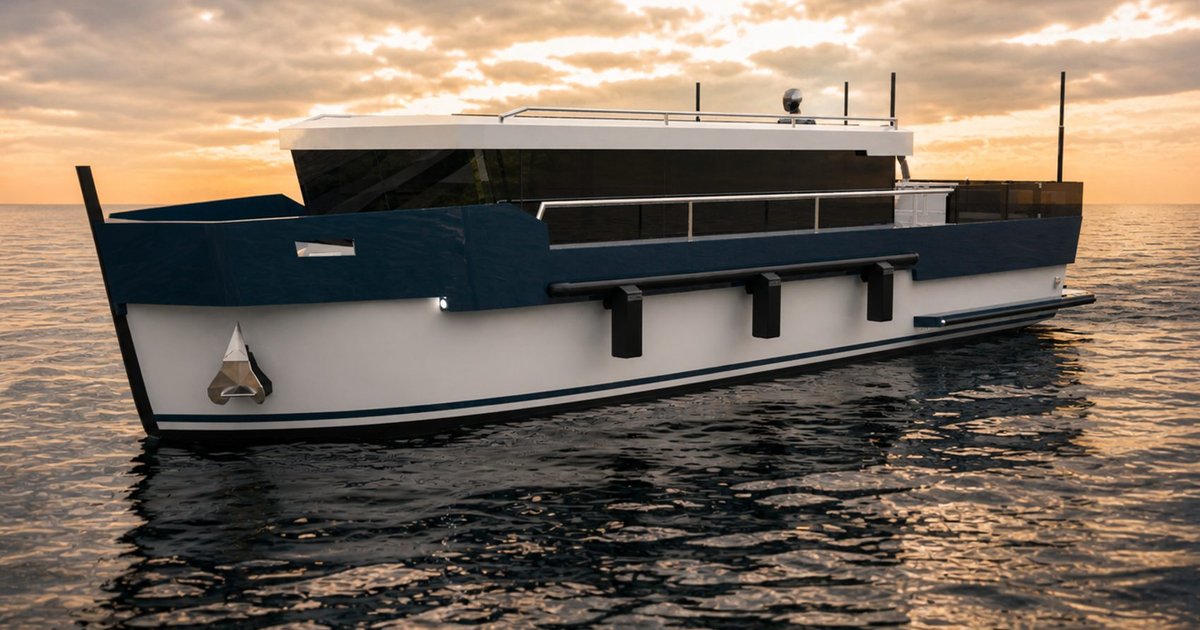
A rub rail integrated fender system removes the handling. One inflatable fender lives inside the rub rail along each side of the hull. At the helm you press once and it inflates and rolls out along the full length of the rail; release, and stainless springs draw it back behind a sealed closure. The fender is always on the correct side, always at the right height, and never in the water when it should not be.
Where Sentinel fits
Sentinel RIFS is that system, engineered and built in the Netherlands for motor yachts, cruisers and sloops of six to twelve metres, as a refit to an existing rub rail or specified on a new build. It does not make you a better boat handler. It removes the one job you cannot do from the helm.